

The climb is only the first stage
The plateau has its own network of paths, forest and cliff viewpoints. Pha Nok Aen is associated with sunrise and Pha Lom Sak with sunset in the Tourism Authority of Thailand's Loei guide. Those names are destinations within the upper area, rather than stops beside the entrance road. Choosing both does not make them a short circuit from the car park.
Thai National Parks describes an approximately 8.7-kilometre approach to the upper camping area: roughly 5.2 kilometres climbing to the plateau, followed by another 3.5 kilometres on flatter ground. These are published route lengths, not a personal fitness assessment or a guaranteed walking time. The steep sections include steps. Keep enough energy for the last approach rather than treating the first summit sign as the end of the day.
What the latest park report actually confirms
A Department of National Parks report dated 24 October 2026 describes visitors on the mountain during the 23–25 October holiday, using both QueQ reservations and walk-in arrangements. It also reports a Lady Zone for women travelling alone and stronger visitor-management measures. That is recent evidence of visits during that period; it does not guarantee a space, an unrestricted route or identical arrangements on your chosen date.
The same park authority describes the usual summit tourism and overnight season as October to May, with June to September reserved for recovery. A seasonal calendar cannot override a temporary wildlife or weather restriction. Before leaving the lower visitor centre, obtain that day's permitted walking routes and the current ascent cut-off. Do not use an older website's office closing time as permission to begin climbing late.

Read the upper routes as separate choices
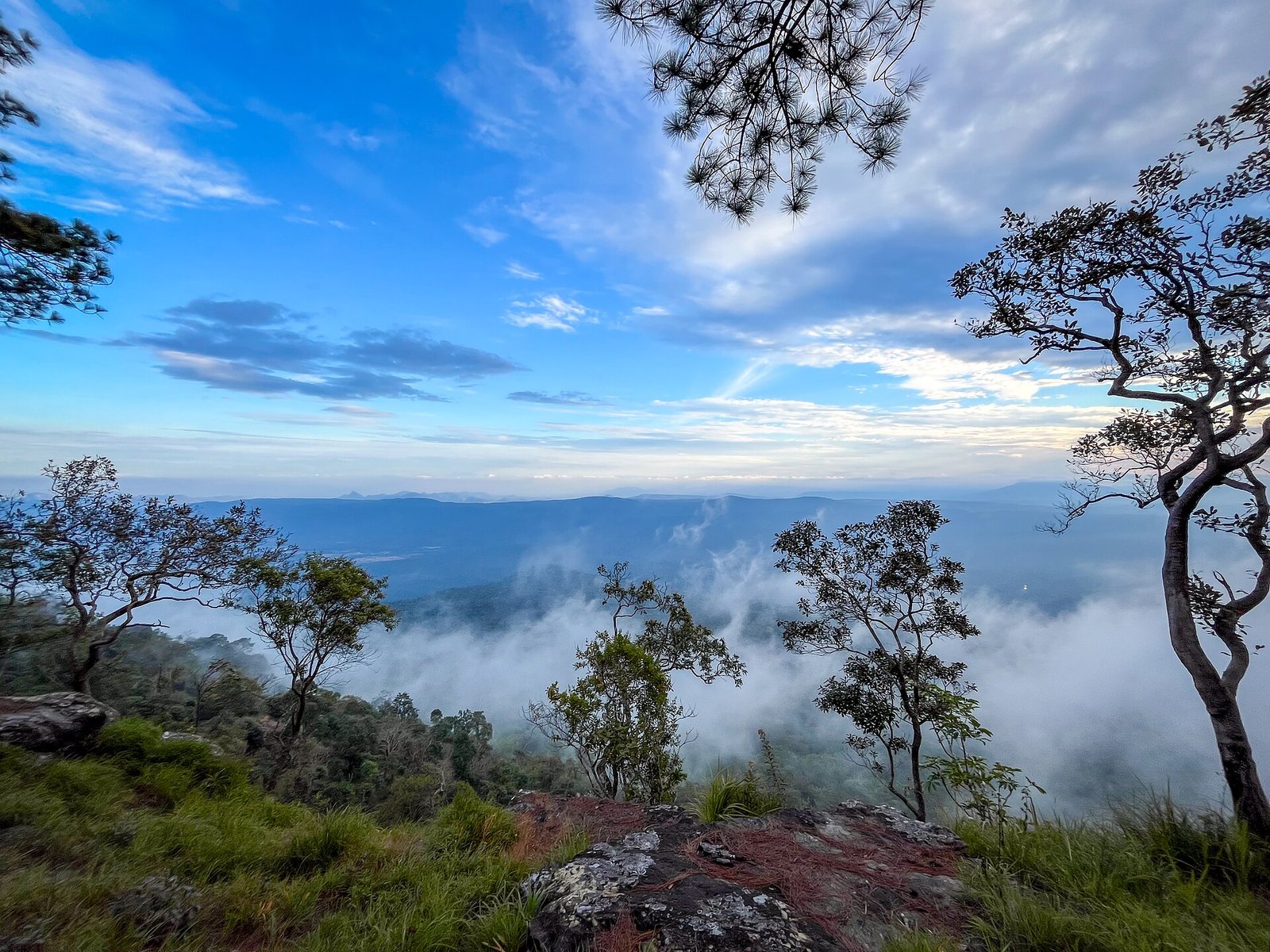
The sandstone tableland explains why the ascent is only one part of the visit. TAT describes a landscape of grassland, pine woodland, evergreen forest, maple trees, waterfalls and cliff edges. A forest route and an exposed cliff walk therefore offer different experiences after the same climb. Choose the feature you came to see rather than assuming that completing the ascent means every upper attraction is nearby.
A provincial public-relations notice for the October 2025–May 2026 season usefully distinguishes the Wang Kwang visitor area, the Phra Phuttha Metta clearing, the reservoir and the cliff sequence from Pha Mak Duk through Pha Daeng towards Pha Lom Sak. It also describes Pha Nok Aen and Tham Yai Waterfall as managed departures with staff screening the routes. These are historical examples of how access can be organised, not the current timetable or permission to follow the same route independently.
For a cliff-focused upper day, tell staff which edge viewpoints you intend to reach and ask about the return. For a waterfall-focused day, ask about that separate route and its wildlife restrictions. Do not combine the names into an invented loop. Published ascent estimates also differ: TAT gives about 5.5 kilometres uphill plus 3.5 kilometres across the plateau, while the tour-operator guide uses a shorter uphill estimate. Treat both as approximate planning descriptions, not a surveyed track or a promise of how long your own walk will take.
Separate the lower night from the upper night
Pha Nok Khao is a recognised approach for intercity bus passengers, followed by a local transfer towards the park. Confirm the actual drop-off and onward arrangement with the operator. A ticket to Loei city is not proof of a stop at the trail approach, and an advertised local transfer is not a reserved connection.
For an overnight walk, settle the plateau accommodation or camping arrangement separately from a hotel below. Ask which sleeping equipment is supplied, where baggage is handed over if using a porter, and when it can be collected. Porter help reduces the load carried on the ascent; it does not remove the walking requirement. Keep essentials with you rather than assuming all luggage arrives beside your tent at the same time.
Plan the walking days around the plateau
An editorial plan is to arrive below the mountain before the hiking day, climb early, and leave the first upper afternoon flexible. Use another day for the permitted cliff or waterfall routes that matter most to you. This is a planning suggestion, not a park itinerary or a promise that every named trail is open. A late sunset excursion also needs an authorised return route and enough time to follow it.
The protected area includes elephant habitat. Trail restrictions and ranger instructions take priority over a saved map or a photograph of an apparently empty path. Keep food and rubbish under the park's rules and stay out of temporarily closed sections. The landscape photographs here show particular past visits; they do not establish current visibility, trail surfaces or wildlife movements.
The overnight decision
Phu Kradueng approach / Pha Nok Khao for the night before; authorised plateau accommodation for the actual mountain night.
Suanlamyai Resort — Wider Wang Saphung transit night only; separate road journey to Phu Kradueng, no near-entrance, transfer or early-start-time guarantee.
Plus Hotel — Wider Wang Saphung transit night before a separate Phu Kradueng journey, not near the entrance or on the plateau. Historical access and arrival concerns remain unverified for a new booking.
Planning references
- DNP: October 2026 visitor report
- DNP: seasonal recovery period
- TAT: Loei
- Thai National Parks: Phu Kradueng
- TAT: Phu Kradueng landscape and approximate ascent
- Loei PRD: September 2025 route-management announcement
Seasonal information and older visit descriptions need to be read with the qualifications in this guide.